Before I begin to reason out "Why should youngsters stick to their traditions?" let's have a look at the survey I took a few weeks ago on "Indian traditions and youth".
My first question on the questionnaire was to know if people understood what did tradition mean.
While some answered that "Traditions are something that we have kept faith in for centuries", They are our "yesterday's action that we follow today", others commented, "Its a simple idea made by humans for humans".
According to the Oxford dictionary, "Tradition is transmission of customs and beliefs from one generation to another". And culture "The arts and other manifestations of human intellectual achievement regarded collectively. i.e folk music, cinema, dance etc." which is close to a few definitions specified by people.
My next question was "If they followed any Indian traditions? Which ones and why? "
75% of them followed Indian traditions because they liked and believed in them and not because they are forced by their parents or the society. Women follow traditions like wearing a toe ring or vermilion on forehead after marriage. And young ones like touching feet of their elders.
My next question was "Do you believe today's youth follows traditions?'
37.5% of respondents are of the opinion that today's youth do not follow traditions.
Voila ! This leads to my captioned title, "Why should youngsters stick to their traditions?"
In this fast-paced, rational thinking world, where western people are turning towards India for peace, Indian youngsters are highly influenced by the West. With modernization, youngsters are slowly forgetting their roots and adapting to a new lifestyle. While one should walk with modern times, one shouldn't forget their origins. Traditions are a part of one's identity.
If traditions are customs and beliefs that we pass on from one generation to another then are grand-parents and parents to blamed for not teaching their grand-kids their customs? Or do we blame Westernization and the changing times?
According to the survey, 40% of the youth do not follow traditions is because "they find it a waste of time and do not have faith in it" or "they look out for logic and reasoning" or "they are unaware about the reasons and meaning behind the traditions."
Therefore I take this opportunity to tell my viewers what will happen if we forget our traditions.
But first let's have a look at a few Indian traditions that do have "logic" and "reasoning" even in the 21st century.
One of the simplest and everyday examples from the Indian traditions would be the "Namaste" or "Namaskara". It is one of the five forms mentioned in the Hindu scriptures to greet someone. The joining of the hands mean, "I bow to you" or "May our minds meet".
It is also demonstrates avoidance of physical contact with the other person. Thus a person coming from outside, (for instance: from work) brings germs along with him. Where an immediate physical contact like, a handshake might transfer these germs, a Namaste would avoid them.
The second example that I would like to acknowledge is "Eating with hands". It is no mystery that Indians eat with their hands. But the logic still remains incomprehensible to me when youngsters today eat with a spoon when in restaurant. For example, a Dosa. Dosa, a flat pancake made from fermented rice flour is supposed to be eaten with hands. Unfortunately, one suddenly turns sophisticated in a restaurant but enjoys relishing it with hands at the fullest when at home. According to the Vedic traditions, one is supposed to eat with hands because, before starting to eat one can enjoy the smell, the texture and the colour of the food. These senses preludes the ignition of fire in our body that helps in digestion, informing the brain to ready itself for the digestive process.
But first let's have a look at a few Indian traditions that do have "logic" and "reasoning" even in the 21st century.
 |
| Namaskara |
It is also demonstrates avoidance of physical contact with the other person. Thus a person coming from outside, (for instance: from work) brings germs along with him. Where an immediate physical contact like, a handshake might transfer these germs, a Namaste would avoid them.
The second example that I would like to acknowledge is "Eating with hands". It is no mystery that Indians eat with their hands. But the logic still remains incomprehensible to me when youngsters today eat with a spoon when in restaurant. For example, a Dosa. Dosa, a flat pancake made from fermented rice flour is supposed to be eaten with hands. Unfortunately, one suddenly turns sophisticated in a restaurant but enjoys relishing it with hands at the fullest when at home. According to the Vedic traditions, one is supposed to eat with hands because, before starting to eat one can enjoy the smell, the texture and the colour of the food. These senses preludes the ignition of fire in our body that helps in digestion, informing the brain to ready itself for the digestive process.
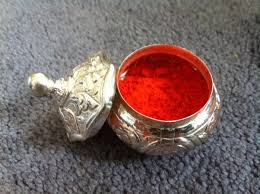
Like I mentioned earlier, women used to apply "Sindoor" or "Vermillion" on their forehead. But modern women of the 21st century find it illogical and carry "it-doesn't-go-with-my-skirt" attitude. The logic behind wearing a sindoor on your forehead is it carries a physiological significance. Sindoor is prepared from turmeric-lime and metal-mercury. Due to its intrinsic properties, it controls your blood pressure and also activates sexual drives.
Hindu traditions exists as long as the Hindu civilization has existed. Not following them would lead to a culture-less society. Having no festivals to celebrate, no family get-togethers to look up to. Is that what we want? If we find a ritual meaning-less, we should try to improve it, modify it but not abandon it. At the same time, we should also keep in mind if something doesn't work we can't blame it on our traditions and beliefs. Our ancestors were not fools, nor were our grand-parents, nor are our parents who have been following these traditions.
It made sense then, it makes sense now. Hence, following them and passing them on to our successors by explaining to them the right logic is all we must do.

A very deep thought convinced in simplest way... keep it Up
ReplyDelete